Preface
During the preparation of the 3rd World Conference on Artificial Consciousness & Frontier Forum on Artificial Consciousness, the conference Organizing Committee extended invitations to leading experts and scholars worldwide and received broad and enthusiastic responses. The invited guests span many fields—computer science, artificial intelligence, neuroscience, philosophy, mathematics, economics, and more—including Nobel Prize laureates, Turing Award recipients, Fields Medalists, and leading figures across disciplines. These experts have outstanding achievements in their respective fields and have profound, direct or indirect influence on research in artificial intelligence and consciousness. This report systematically summarizes the invitation status of all invited international experts and scholars, introducing their backgrounds, credentials, and influence, and describing their responses and forms of participation. Overall analysis shows the conference's exceptional level of internationalization and academic stature: more than 40 top international experts were invited, and to date most have confirmed participation or will contribute academic reports online or on site; those unable to attend have also written to express their blessings and support. The following sections present a detailed overview of the invited experts, highlight commentary, and selected excerpts of their messages.
Overall Analysis of Invitations
Scope and Level of Invitations: The conference has invited internationally renowned scholars and industry leaders from more than ten countries, including laureates of the world's top awards such as the Nobel Prize, Turing Award and other top global prizes, members of major European and American academies, and other key figures related to AI and consciousness research. The invited guests span a wide range of fields: pioneers in computer science and AI, authorities in neuroscience and cognitive science, and thinkers with profound insights at the intersection of the humanities and social sciences. Such a broad and high-profile lineup highlights the conference's ambition and influence—grounded in frontier issues of AI and consciousness and aiming to bring together top minds worldwide.
Confirmed Participation: To date, among the guests who have replied,more than half have confirmed that they will participate in different ways. Some experts will attend in person for on-site exchanges. For example, WAAC Academician and Fudan University brain-science expert Gerwin Schalk and others have accepted the invitation and plan to attend the conference in person and deliver keynote speeches. More experts will present or discuss online through formats such as pre-recorded video talks, live video-linked presentations, or written submissions. For example, Ohio State University professor and World Food Prize laureate Rattan Lal has confirmed that he will submit a keynote video; and neurologist at the University of Exeter in the UK, Adam Zeman will contribute by writing a special academic report for the discussions. The conference secretariat has provided flexible participation options tailored to different guests, ensuring they can contribute in forms that suit them. Overall statistics show that nearly 20 invited international experts have confirmed participation through talks or written reports, including several world-renowned scholars. This scale of participation not only demonstrates the appeal of the conference theme to global experts, but also reflects the efficiency and professionalism of the conference organization.
Support from Invitees Unable to Attend: Some invited guests are unable to attend in person due to schedule, health, holidays, and other reasons, but almost all respondents expressed strong alignment with the conference's vision and offered sincere blessings and support in their replies. Many world-class masters praised the importance of the conference theme and wished the event a complete success. For example, the Turing Award laureate hailed as one of the "fathers of the Internet" for co-inventing the TCP/IP protocol, Vinton G. Cerf though unable to attend because of a scheduling conflict, wrote in his reply that "it sounds like it will be a great conference" and conveyed his good wishes for a successful meeting. Another example is the 2017 Turing Award laureate and former President of Stanford University, John L. Hennessy who concluded his letter by saying: "Thank you for your invitation. I cannot attend, but I sincerely hope the conference is successful." Another example is the contemporary philosopher of mind David J. Chalmers who, although unable to attend, wrote back: "Best wishes for the conference," and spoke highly of the conference theme. These sincere messages fully reflect the conference's convening power and the international academic community's attention and support for artificial-consciousness topics. The organizing committee also plans to share these blessings and messages during the conference to showcase its international influence and ability to bring the community together.
In summary, the overall results of the invitation outreach for this conference have been remarkable: broad coverage, high level, and enthusiastic responses from guests.Among the more than 40 invited experts, nearly 20 guests have confirmed attendance or agreed to provide reports, spanning multiple online and on-site formats; the remaining guests who cannot attend have also expressed support and blessings through letters. This not only demonstrates the academic appeal of the conference theme—"artificial consciousness"—but also indirectly reflects that China's influence in initiating global dialogue in this frontier field is rising. In the following sections, we classify the invited experts by field, introduce and comment on them one by one, and quote selected key sentences from some replies for readers' appreciation.
Highlights of Invited Experts by Field
To present the roster of invited guests in a clear and organized way, the experts are grouped below into several categories by research field. After each expert's name, we note their most representative identity or honor and briefly describe their academic/industry contributions and influence. We also indicate their form of participation in the conference or the status of their reply.
Computer Science and Artificial Intelligence
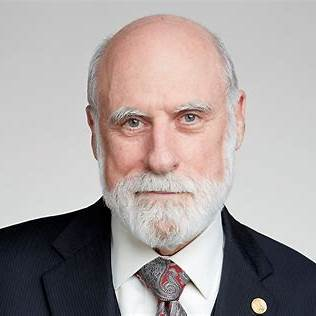
Vinton G. Cerf
- Vinton G. Cerf – Internet pioneer and 2004 Turing Award laureate (shared with Robert E. Kahn). As a computer scientist who co-designed the TCP/IP protocol suite, he is widely regarded as one of the "fathers of the Internet," making foundational contributions to the birth and development of the modern Internet. Dr. Cerf strongly recognizes the importance of the topic of artificial consciousness; in his reply he sent warm wishes for the conference, praising it as "meaningful and exciting," and wishing it a complete success.
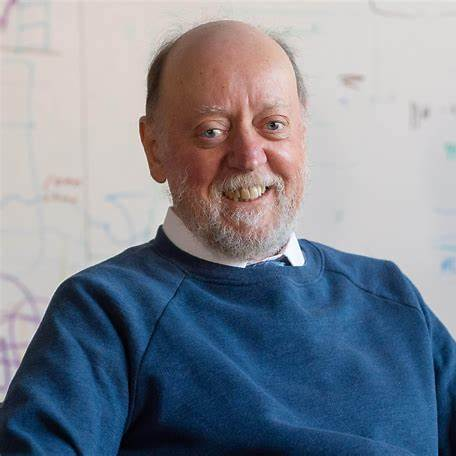
Jack J. Dongarra
- Jack J. Dongarra – A leading authority in numerical computing and high-performance computing, and the 2021 Turing Award recipient. Prof. Dongarra received this honor for outstanding contributions to numerical algorithms, linear-algebra libraries, and performance optimization for supercomputers. In his reply, he thanked the conference for the invitation and said he was trying to adjust his schedule in hopes of participating. This reflects his strong interest in and support for the conference theme.
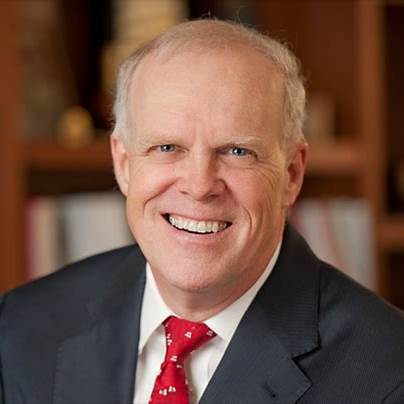
John L. Hennessy
- John L. Hennessy – Computer architecture expert; 2017 Turing Award laureate (shared with David A. Patterson); and current Chairman of Alphabet. Prof. Hennessy is renowned for his revolutionary contributions to the development of RISC architectures. Due to heavy professional commitments, he cannot attend in person, but he wrote specifically to express support and wish the conference great success. As an influential figure in both Silicon Valley and academia, his blessings add weight to the conference.
- Julia B. Hirschberg – Computer scientist and pioneer in natural language processing and speech technologies; member of the U.S. National Academy of Engineering; former chair of the ACM/AAAI joint committee; and currently Professor of Computer Science at Columbia University. Prof. Hirschberg has achieved outstanding results in speech synthesis, speech understanding, and dialogue systems, and is an outstanding female leader in AI. She has expressed great interest in the conference theme. As an authority in speech and AI, her attention itself underscores the importance of artificial-consciousness topics across AI subfields.
- Andrew Ng – A renowned AI scientist and educator; Associate Professor of Computer Science at Stanford University (on leave); former leader of Google Brain and Baidu Research; and co-founder of the online education platform Coursera. Dr. Ng has worldwide influence in machine learning and deep learning and is regarded as one of the key drivers of the modern AI wave. He greatly appreciates the conference's focus on the frontier topic of artificial consciousness. Prof. Ng asked an assistant to reply with thanks, wishing the conference success and expressing hope for future exchanges on related issues.
- David A. Patterson – One of the founders of RISC architecture; 2017 Turing Award laureate (shared with Hennessy); and Professor Emeritus of Computer Science at the University of California, Berkeley. In his reply, Prof. Patterson expressed his gratitude for the invitation but said he could not attend for personal reasons, adding that he "hopes the conference will be a complete success." His pioneering of the RISC concept and outstanding contributions to computer architecture make him a pivotal figure in computing history; his good wishes likewise reflect the international computing community's attention to the exploration of artificial consciousness.
- Daphne Koller – Computer scientist and expert in artificial intelligence and computational biology; Professor Emerita at Stanford University; and co-founder of Coursera. Prof. Koller has made outstanding contributions to machine learning and graphical models and is a member of the U.S. National Academy of Engineering. Through an assistant, she affirmed the conference theme and conveyed her best wishes to the organizing committee. Her response reflects the attention and support that industry-leading figures are giving to artificial-consciousness research.
- Andrew "Andy" Adamatzky – Professor at the University of the West of England (UWE) in the Faculty of Computer Science and Creative Technologies, and Director of the Unconventional Computing Laboratory. Not confined to traditional silicon-based computation, Prof. Adamatzky has long studied information processing using non-traditional substrates such as slime molds, fungi, and chemical reaction-diffusion media, and is regarded as a pioneer in "unconventional computing." He has distinctive insights into the philosophy of computation and cross-disciplinary innovation. Upon receiving the invitation, Prof. Adamatzky said he was honored, but because the conference dates fall during a Western holiday period, he may be unable to participate on site. Even so, he wrote that if time permits he will consider joining discussions online, and he expressed strong interest in the conference theme.
- Minoru Asada – Professor at Osaka University in Japan and an expert in cognitive developmental robotics; IEEE Fellow. Prof. Asada is a leading figure in research combining robotics and artificial intelligence; he initiated the RoboCup competition and has made important contributions to cognitive development in robots. The conference invited Prof. Asada to provide a video report, which he gladly accepted, and he plans togive a talk on consciousness in cognitive robotics. Prof. Asada's participation will bring a valuable East Asian perspective and the latest developments from robotics, highlighting the conference's international diversity.
- Antonio Chella – Professor of Robotics at the University of Palermo, Italy, and former Editor-in-Chief of the International Journal of Machine Consciousness. Prof. Chella is one of the pioneers of artificial-consciousness research in Europe, and his team has achieved notable results in autonomous robot consciousness and multi-agent systems. He has gladly accepted the invitation and will provide an academic report on the theme of "Multi-Agent Systems and Artificial Consciousness." In his reply, Prof. Chella highly praised the conference as significant for the global artificial-consciousness research community and said he would contribute by sharing his team's latest findings. He also expressed gratitude for the organizers' professionalism and enthusiasm.
- Włodzisław Duch – Professor at Nicolaus Copernicus University in Poland, Fellow of the International Neural Network Society, and Academician of the Polish Academy of Sciences. Prof. Duch is highly regarded in the interdisciplinary area spanning artificial intelligence, neural computation, and cognitive science; he has served as President of the European Neural Network Society and is also an Academician of the World Academy of Artificial Consciousness. His theoretical research on cognitive architectures and machine consciousness is deep and distinctive. After accepting the invitation, Prof. Duch said he was happy to "give a talk on digital intelligent life." He is currently preparing a recorded video report and coordinating details such as talk length and scheduling with the organizers. The active participation of this cross-disciplinary master will bring high-level reflections on digital agents and cognitive architectures to the conference.
- Peter J. Bentley – British computer scientist, well-known popular-science writer in evolutionary algorithms and digital life, and Honorary Professor in the Department of Computer Science at University College London. Dr. Bentley has long studied bio-inspired algorithms and complex self-organizing systems, and has authored best-selling popular books such as Digital Biology. In replying to the invitation, he said he was very interested in the conference. The organizers are currently communicating with Dr. Bentley on the details. If it works out, his participation will add a voice with both academic depth and public-engagement influence.
Life Sciences (Neuroscience, Biomedicine, etc.)
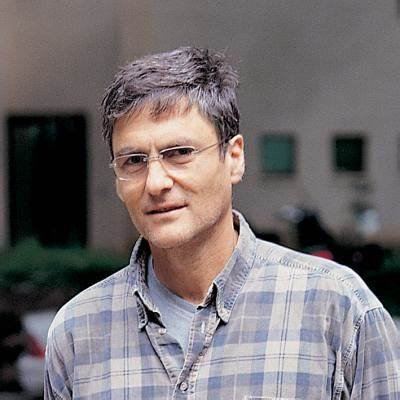
Ehud Ahissar
- Ehud Ahissar – Professor Emeritus in the Department of Neurobiology at the Weizmann Institute of Science, Israel; Academician of the World Academy of Artificial Consciousness (WAAC); and Director of a Center of Excellence of the Israel Science Foundation. Prof. Ahissar proposed the sensorimotor-loop theory and made pioneering contributions to cognitive neuroscience. He has gladly accepted the invitation and will speak on the topic of "sensorimotor closed loops in consciousness," bringing the latest insights on how sensorimotor mechanisms relate to consciousness.
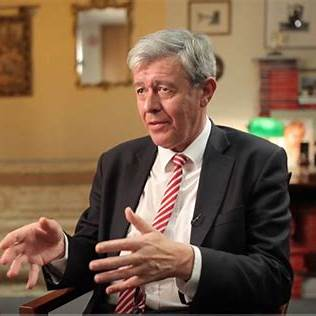
Karl J. Friston
- Karl J. Friston – A leading authority in neuroimaging and a master of theoretical neuroscience in the UK, and a Fellow of the Royal Society. Prof. Friston is a founder of functional magnetic resonance imaging (fMRI) data analysis and the Free Energy Principle, establishing a profound theoretical framework for explaining brain cognitive functions. In his reply, Prof. Friston expressed his sincere thanks for the invitation, but politely declined the speaking opportunity because he wished to remain neutral on the topic of machine consciousness and also to accommodate other advisory responsibilities. He recommended another colleague who is more focused on this field as an alternative and conveyed his sincere wishes for the conference. This reflects the humility of a great scientist and his serious, responsible attitude toward the meeting.
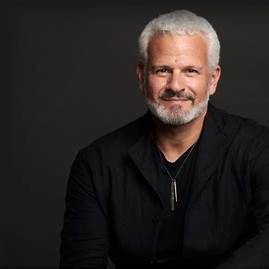
Adam Gazzaley
- Adam Gazzaley – Professor at the University of California, San Francisco (UCSF), neuroscientist, and founding director of the Neuroscape Center for Neurotechnology. Prof. Gazzaley is a pioneer in attention and cognitive training; he developed the well-known NeuroRacer cognitive-training game and published results in a Nature journal showing that video games can improve cognition in older adults. He is also a WAAC Academician. Prof. Gazzaley is deeply engaged with artificial-consciousness topics and said he is willing to participate online. Ifeverything goes smoothly, Prof. Gazzaley will share his research insights on the relationship between brain plasticity and consciousness through an online talk and discussion.
- May-Britt Moser – Norwegian neuroscientist and 2014 Nobel Prize in Physiology or Medicine laureate. Prof. Moser received the prize (together with Edvard I. Moser and John O'Keefe) for discovering "place cells" and "grid cells" in the brain, making revolutionary contributions to our understanding of the mechanisms of spatial navigation and memory. As one of the world's top female neuroscientists, she—due to a busy end-of-year schedule—politely declined on-site participation through an assistant, but expressed strong recognition of the conference theme and sent her blessings. She specifically noted that artificial-consciousness research is very important and "highly topical," and believes the conference will advance the field.
- Edvard I. Moser – Norwegian neuroscientist and 2014 Nobel Prize in Physiology or Medicine laureate (shared with his wife May-Britt Moser and John O'Keefe). Prof. Moser is a leading figure in research on the brain's "spatial positioning system" and currently serves as Director of the Kavli Institute for Systems Neuroscience at the Norwegian University of Science and Technology. In his reply, he thanked the conference for the kind invitation but, occupied with research and administrative duties, regretted that he could not attend; he nevertheless offered sincere wishes for the meeting. He emphasized that the topic of artificial consciousness is very interesting and hoped the conference would be a complete success. While his absence is unfortunate, his response also shows the topic's appeal even to Nobel-level scientists.
- Thomas C. Südhof – German-American biochemist, 2013 Nobel Prize in Physiology or Medicine laureate, and Professor at Stanford University. Prof. Südhof received the Nobel Prize for contributions to understanding the mechanisms of synaptic transmission and is an authority in neurobiology. He was invited to discuss the relationship between neural mechanisms and consciousness at the conference. However, in his reply he said that because of intensive lab work and because he does not consider himself sufficiently knowledgeable about artificial-consciousness topics, he cannot attend in person, and he wished the conference great success.
- John O'Keefe – British-American neuroscientist, 2014 Nobel Prize in Physiology or Medicine laureate, and Professor Emeritus at University College London. Prof. O'Keefe discovered "place cells" in the hippocampus, revealing the neural mechanisms by which mammals locate themselves and navigate. This discovery laid the foundation for research on spatial cognition and memory. Prof. O'Keefe strongly supports the conference's vision, but due to health and travel reasons he cannot make the long trip to China. In his reply, he thanked us for the invitation and said that "the exploration of artificial consciousness is profoundly meaningful," and he wished the conference complete success. As a scientist who made landmark contributions to the relationship between consciousness and the brain, his endorsement adds important academic support to the conference.
- Sir Alan Fersht – Distinguished British chemist and authority in protein folding; former Vice President of the Royal Society; and recipient of the 2020 Royal Society Copley Medal. Although Sir Alan comes from chemistry and structural biology, he has strong interest in questions about intelligence and the nature of life. The conference specifically invited him to join cross-disciplinary discussions. In his reply, he expressed willingness to participate and wished the conference and scientific work in 2026 to go smoothly. If his schedule allows, he may attend in person and share his unique insights into the links among complex molecular systems, self-organization phenomena, and consciousness. This would broaden the conference's discussion horizon to a wider domain of the life sciences.
- Roi Cohen Kadosh – Professor of Psychology at the University of Surrey, cognitive neuroscientist, and a Young Academy Fellow of the British Academy. Prof. Cohen Kadosh has made significant contributions in non-invasive brain stimulation technologies and digital cognition, with research involving disorders of consciousness and neural modulation of cognitive processes. He has accepted the conference invitation and plans to provide an online report and participate in discussions. Prof. Cohen Kadosh's participation will bring new perspectives on cognitive-enhancement technologies and consciousness research.
- Cathy J. Price – British cognitive neuroscientist and Director of the Wellcome Centre for Human Neuroimaging at University College London. Prof. Price is internationally leading in research on language processing in the brain and aphasia rehabilitation; her work reveals the division of labor among different brain regions in language production and comprehension. The conference also invited Prof. Price. In her reply, she expressed great interest in the conference theme and conveyed her best wishes. As an authority in language and cognition, her attention reflects the inspirational significance of artificial-consciousness research for understanding higher cognitive functions of the brain.
- Ezequiel Morsella – Professor of Psychology at San Francisco State University and Assistant Professor of Neurology at the University of California, San Francisco. Prof. Morsella proposed the well-known "Passive Frame Theory" and has made outstanding contributions to research on the relationship between consciousness and action control. He is also an active experimental psychologist in consciousness science. Prof. Morsella has gladly accepted the invitation; in his reply he wrote, "It is my honor to be invited," and has already confirmed an online report to explore the neural mechanisms by which consciousness arises and its behavioral significance. His participation will provide theoretical viewpoints from an integrated perspective of psychology and neuroscience.
- David Gamez – UK scholar at the intersection of computer science and philosophy, Senior Lecturer in the Department of Computer Science at Middlesex University. Dr. Gamez holds doctorates in both philosophy and computer science and has long studied the relationship between human and machine consciousness, authoring works such as Human and Machine Consciousness. He proposed theoretical frameworks for quantifying subjective consciousness and mapping it to physical indicators, and has worked on building general intelligence metrics to compare the intelligence levels of humans, animals, and AI. Dr. Gamez fully agrees with the conference's vision and happily accepted the invitation; he will participate by combining online reports and interactions to take part in the conference. His report will explore how to study and measure consciousness using mathematical and computational methods, which will be a major highlight of the conference.
- Adam Kepecs – Professor of Neuroscience and Psychiatry at Washington University School of Medicine (USA). Prof. Kepecs is a well-known expert in computational psychiatric neuroscience, with research focused onthe neural computations by which the brain makes complex decisions and represents confidence levels, and exploring their applications in mental disorders. The conference invited Prof. Kepecs to give a report, which he happily agreed to deliver in the form of an online talk plus a brief online discussion. Through his presentation, the conference will gain an understanding of frontier research on decision consciousness and brain signal processing.
Philosophy and Cognitive Science
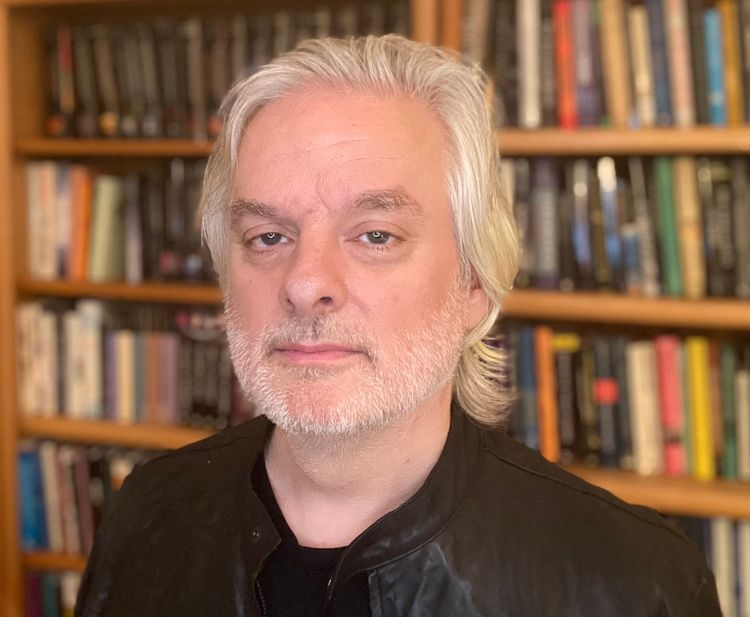
David J. Chalmers
- David J. Chalmers – One of the most influential contemporary philosophers and a professor at New York University; originator of the famous "hard problem" of consciousness. Prof. Chalmers enjoys great prestige in philosophy of mind and consciousness studies; his theories on the nature of consciousness have profoundly influenced philosophical discussions in cognitive science and artificial intelligence. As a key intellectual leader invited to the conference, he praised the theme in his reply as "very important and challenging," and said he looks forward to the conference advancing deeper discussion of artificial consciousness. He wished the conference complete success and hoped to have opportunities to participate in similar events in the future. Prof. Chalmers's support undoubtedly raises the conference's visibility within the international philosophy-of-mind community.

Huw Price
- Huw Price – British-Australian philosopher and Professor Emeritus at the University of Cambridge; formerly Bertrand Russell Professor of Philosophy. Prof. Price has made notable contributions in philosophy of time, causation, and the philosophy of quantum mechanics, and is also an advocate of AI safety and futures research. He is deeply interested in foundational philosophical questions of artificial consciousness. In his letter he offered blessings for the conference and praised the organizers for choosing a theme that "fits the needs of our times." Although he cannot attend in person, his attention as a senior figure in philosophy adds intellectual depth to the conference.
- Gualtiero Piccinini – Professor of Philosophy at the University of Missouri–St. Louis, and a well-known contemporary scholar in philosophy of mind and philosophy of computation. Prof. Piccinini has long explored the philosophical foundations of the concept of "computation," as well as philosophical issues in psychology and neuroscience. He has authored works such as Physical Computation and proposed a theory of mechanical computation that has influenced theoretical frameworks in cognitive science. Prof. Piccinini thanked the conference for the invitation; in his reply he expressed strong interest in the theme and hoped for opportunities to exchange ideas on related topics in the future.
- Barbara Tversky – American cognitive psychologist; Professor Emerita at Stanford University and Visiting Professor at Columbia University. Prof. Tversky has made outstanding contributions to cognitive psychology, especially in spatial cognition and visual thinking. Her research reveals how humans use spatial and imagery-based thinking to support cognitive processes, which also offers important inspiration for human–computer interaction design in AI. In responding to the invitation, she wrote that "my research ideas align with your conference goals." She conveyed her best wishes for the conference and said she would be willing to participate in related discussions in the future if an appropriate opportunity arises.
- David Gamez – (This topic also falls within the interdisciplinary area of philosophy and artificial intelligence; Dr. Gamez was introduced earlier in the Life Sciences section, so the details are not repeated here.). Dr. Gamez has backgrounds in both philosophy and computer science, and his theoretical work on machine consciousness has also had important influence in philosophy. In the philosophical domain, his contribution lies in transforming questions about subjective experience into frameworks for scientific measurement and computation, offering new ideas for the classic mind-body problem in philosophy of mind. Therefore, his participation will also greatly promote the philosophical discussion section of the conference.
(Note: To avoid repetition, the main information about Dr. Gamez has already been presented earlier; here we focus on his philosophical significance.)
Mathematics, Logic, and Economics
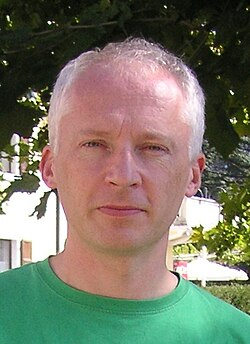
Marcus du Sautoy
- Marcus du Sautoy – British mathematician; Simonyi Professor for the Public Understanding of Science at the University of Oxford; and recipient of the 2009 Royal Society Faraday Prize. Prof. du Sautoy has contributed to research in group theory and number theory, and is especially known for his work in science communication, authoring popular books on mathematics and its connections to culture. He actively engages in discussions that connect mathematics with artificial intelligence, artistic creativity, and other cross-disciplinary areas. The conference invited him to discuss AI and mathematical creativity. In his reply he described the conference topic as "very interesting" and said he was "happy to accept the invitation." He expressed strong interest and offered blessings for the conference. If conditions allow in the future, he looks forward to deeper exchanges with different communities on related themes.
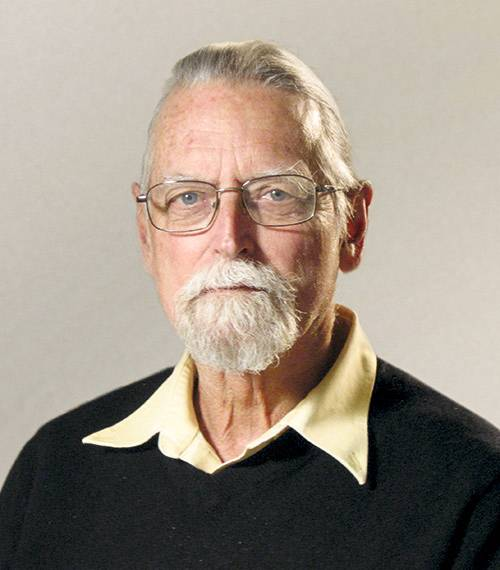
David Bryant Mumford
- David Bryant Mumford – American mathematician, Fields Medalist (1974), and member of the U.S. National Academy of Sciences. Prof. Mumford is famous for foundational contributions to algebraic geometry; later his research interests shifted to computer vision and pattern recognition, introducing probabilistic and geometric methods into vision theory. He has received honors such as the U.S. National Medal of Science and is regarded as an important figure bridging pure mathematics and the science of intelligence. Although now in his 80s, Prof. Mumford still shows concern for research onartificial consciousness; in his reply he thanked us for the invitation and enclosed a related paper for reference. He wished the conference success—his masterly demeanor is evident between the lines.
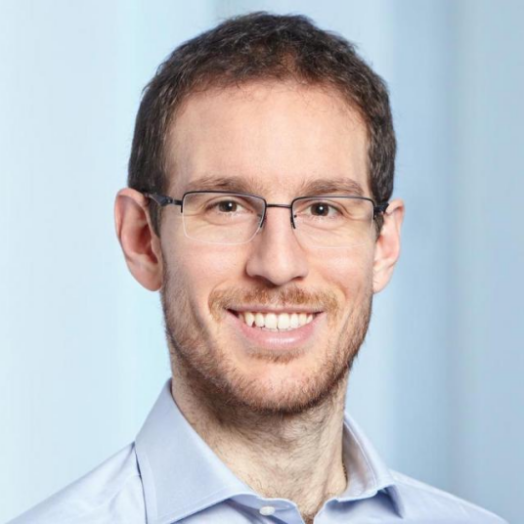
Alessio Figalli
- Alessio Figalli – Italian mathematician and professor at ETH Zurich, and 2018 Fields Medalist. Prof. Figalli has made pioneering contributions to optimal transport theory and partial differential equations. His brilliance in mathematical analysis has made him a leading figure of the new generation of mathematicians. Through an assistant, Prof. Figalli expressed deep regret that he could not attend and wished the conference great success.
- Alexander A. Beilinson – Ukrainian-American mathematician and professor at the University of Chicago. Prof. Beilinson has deep expertise in algebraic geometry and mathematical physics, and has received honors such as the 1999 Ostrowski Prize, the 2018 Wolf Prize in Mathematics, and the 2020 Shaw Prize. He is renowned for mastery of highly abstract theoretical mathematics. Prof. Beilinson wished the conference everything going smoothly. His reply reflects a pure mathematician's humble attitude toward cross-disciplinary topics, and adds a nice anecdote to the conference's invitation outreach.
- Dana S. Scott – American mathematician and logician, 1976 Turing Award laureate, and pioneer of computer science. Prof. Scott holds a distinguished position in theoretical computer science and logic; his Turing-related contributions include foundational theories such as domain theory and program logic. Prof. Scott wished the conference success. His sincere reply greatly encouraged the organizing committee. As a senior figure in computer science and logic, his endorsement itself is support for the study of artificial consciousness.
- Christopher A. Pissarides – British-Cypriot economist, 2010 Nobel Prize in Economic Sciences laureate, and professor at the London School of Economics and Political Science. Prof. Pissarides received the prize for contributions to the theory of unemployment and labor markets and is an authority in labor economics. In his reply, he strongly affirmed the value of artificial-consciousness research, but regrettably said he was "too busy to accept the invitation." He mentioned that artificial consciousness and the development of AI are "very important and topical issues," and wished the conference well. His attention reflects the economics community's interest in AI and its societal impacts, and also reminds us that discussions of artificial consciousness need to incorporate economic and policy perspectives.
Technology, Humanities, and Society
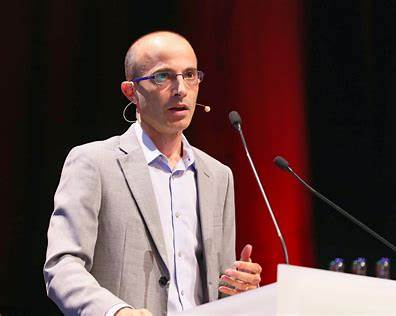
Yuval Noah Harari
- Yuval Noah Harari – Israeli historian and futurist thinker, professor at the Hebrew University of Jerusalem. Prof. Harari is the author of global bestsellers such as Sapiens and Homo Deus, and he examines the impact of human social evolution and technological change from a macro perspective, offering deep reflections on the challenges that AI may bring. The conference specially invited him to write his insights on artificial consciousness. Through his representative, Prof. Harari replied that he was very willing to support the conference and has already submitted the requested keynote report. He thanked the organizing committee for their follow-up and attached a carefully written keynote text, fully demonstrating the importance he places on the conference. His participation elevates the discussion to the level of civilizational evolution and humanity's future, providing a valuable perspective for dialogue that integrates technology and the humanities.
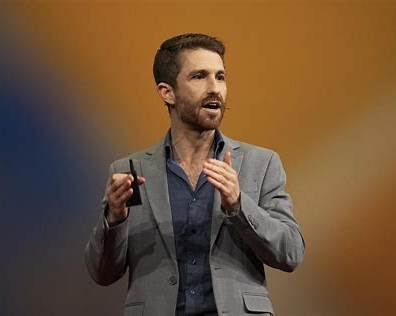
Tristan Harris
- Tristan Harris – American technology-ethics advocate, former Google design ethicist, and co-founder of the Center for Humane Technology. Mr. Harris is known for calling attention to the negative impacts of the "attention economy" and for pushing technology toward the public good; the media have dubbed him the "moral conscience of Silicon Valley." The conference invited him to speak on technology ethics in the age of AI. Through an assistant, Mr. Harris wrote to thank us for the invitation and expressed respect for the conference's efforts to focus on artificial consciousness and ethics, and wished the conference success. Meanwhile, his team said they are willing to look for opportunities to cooperate in the future. As a leading figure in technology ethics today, Harris's support adds a humanistic care element to the conference.
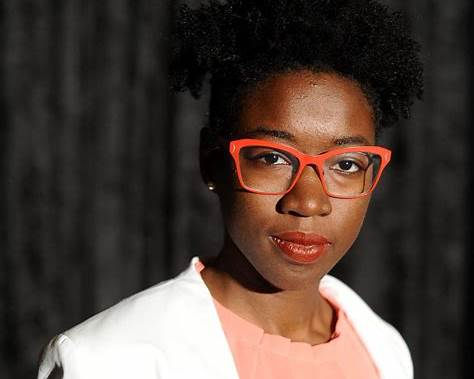
Joy Buolamwini
- Joy Buolamwini – Ghanaian-American computer scientist and digital-rights advocate, and a researcher at the MIT Media Lab. Ms. Buolamwini is widely known for exposing racial and gender biases in commercial facial-recognition algorithms; her "Gender Shades" project pushed technology companies to improve algorithmic fairness. She is also one of the founders of a nonprofit organization dedicated to ensuring fairness and justice in AI. The conference invited her to join discussions on AI ethics and inclusivity. Her team replied to the invitation; her attention to AI moral issues and the professional communication from her team show the conference's convening power in exploring the social impacts of technology.
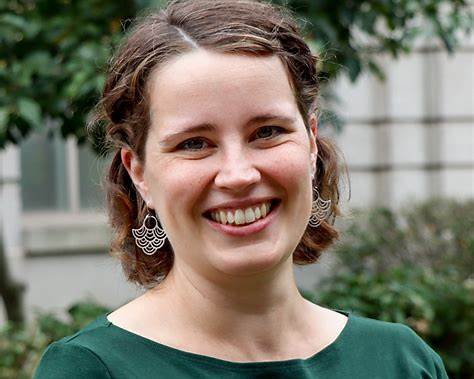
Helen Toner
- Helen Toner – Australian expert in AI policy and safety, formerly Program Director at the Center for Security and Emerging Technology (CSET). Ms. Toner focuses on AI governance, policy, and safety strategy, and is an internationally recognized thinker on AI policy. She was invited to share views on global governance and safety challenges of AI at the conference. In her reply, she thanked us for the invitation and said the conference theme is "very timely and important," and she especially wished the conference complete success, and expressed hope for opportunities to participate in related discussions in the future. Her reply reflects the policy-research community's emphasis on frontier topics such as artificial consciousness; her ideas will, through this interaction, provide inspiration for the conference's societal-level discussions.
Selected Excerpts of Experts' Blessings and Messages
During the invitation process, many international masters shared sincere words in their letters; their support and expectations for the conference are deeply moving. Below are selected heartfelt lines from some replies, for readers' appreciation:
- Turing Award laureate Vinton G. Cerf wrote in his letter:"I wish I could accommodate this lovely invitation... It sounds like a great conference!"("I really wish I could accept this wonderful invitation… it sounds like a great conference!"). In just a few words, he conveyed his blessings.
- Former Stanford University president John L. Hennessy concluded his reply with:"I hope it is a successful conference."("I hope the conference is successful."). Concise, yet full of expectation.
- Philosopher of mind David J. Chalmers wrote sincerely:" I wish you all the best with the event!"("I wish the conference all the best!"). The master's blessings leap off the page.
- At the age of 93, Turing Award laureate Dana S. Scott replied in a witty tone:"Best wishes for a successful conference."("Sincere wishes for the conference's complete success."). Between the lines shines an elder's care and support for the work of the next generation.
- Renowned economist Christopher A. Pissarides candidly wrote in his reply:"I agree with you that it is a very important and topical issue. I hope you have a good conference."("I agree with you that it is a very important and topical issue. I hope you have a good conference."). It is evident that the topic of artificial consciousness resonates with experts from different fields and is truly a question of our times.
- In the reply from Tristan Harris's assistant, the message reads:"Best wishes for a successful conference. Please do keep us in mind for future opportunities."("Best wishes for a successful conference. Please do keep us in mind for future opportunities."). This reflects affirmation of the conference and willingness to engage in future participation.
These brief words are filled with the invitees' support and high hopes for the conference. Such blessings reflect the international academic community's emphasis on artificial-consciousness research and show that this conference has already made waves on the global intellectual landscape. With so much sincere encouragement and expectation, the organizers and participants feel an even greater sense of mission—and an even stronger confidence.
Conclusion and Outlook
In summary, the invitation outreach for the 3rd World Conference on Artificial Consciousness has achieved fruitful results: dozens of world-class experts and scholars across disciplines were invited and responded enthusiastically. On the one hand, many international masters have confirmed they will contribute to the conference through keynote talks, special videos, written messages, and other formats, demonstrating the conference's academic appeal and global influence; on the other hand, even guests who cannot attend for various reasons have written to express support, bringing their reflections and blessings on artificial-consciousness topics to the conference. This grand gathering of distinguished minds—young and old alike is exactly the outcome of careful preparation and the shared expectations of the international academic community.
The conference's guest lineup is exceptionally impressive and its disciplinary coverage unusually broad—rare among similar domestic academic conferences. The participation of heavyweight figures such as Nobel laureates and Turing Award winners places the conference at the very frontier of developments in the relevant research fields. It is foreseeable that during the meeting, guests from different backgrounds will generate new sparks through intellectual exchange, driving leapfrog progress in research on artificial intelligence and consciousness. From sensorimotor-loop theory to measures of machine consciousness, from neural mechanisms in the brain to reflections on technology ethics, many frontier topics will be explored and deepened at the conference.
All of this signals that artificial consciousness—perhaps the ultimate frontier of human science and philosophy—is increasingly becoming a focus of global attention. By bringing together top international wisdom, this conference has built a high-level platform for dialogue. It is expected not only to generate substantial scholarly results, but also to demonstrate China's openness to collaboration and its determination to lead exploration in this field.
As the conference approaches, we extend our heartfelt gratitude to all guests who have supported and participated in the conference. As so many masters have wished, we look forward to the complete success of the 3rd World Conference on Artificial Consciousness and hope it will become an important milestone in advancing global research on artificial intelligence and consciousness. The smooth convening of the conference will also bring us new inspiration and outlook: humanity's quest for"artificial consciousness" is long and arduous. Along this road, international cooperation and the blending of ideas will be the guiding lights that illuminate the unknown. Let us wish the conference complete success, and may the future exploration journey of artificial consciousness be starry and fruitful!